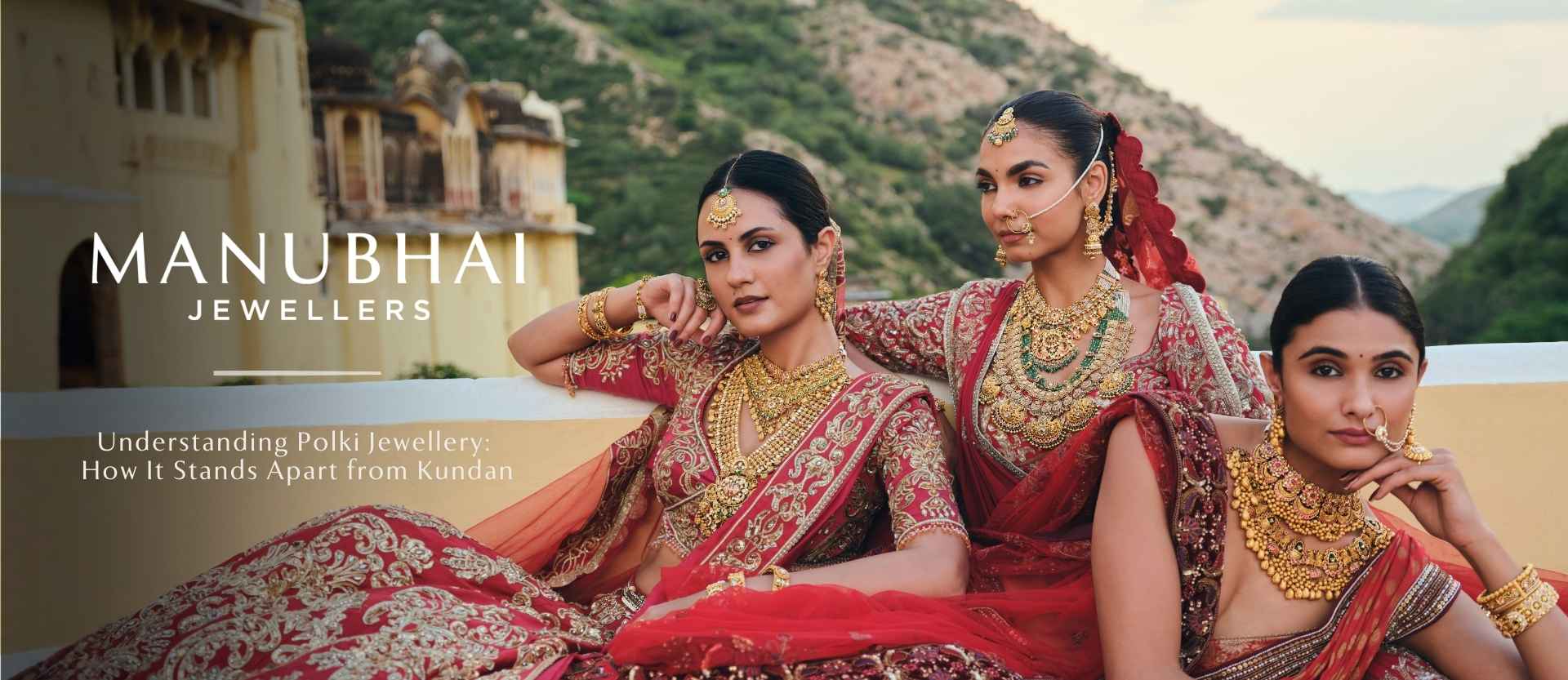
You have heard the names Polkiand Kundan, especially when shopping for bridal or heirloom Indian jewellery. They both have that incredible, regal look, a sparkle that whispers of Mughal courts and royal elegance. But are they the same thing?
The Answer: While both stem from the magnificent Jadau (or setting) technique perfected during the glorious Mughal era, they are fundamentally different in their core materials and the ultimate finish. Understanding this difference is key, especially when you’re making a significant investment, from a trusted legacy of more than 30 years like Manubhai Jewellers.
Polki is the jewellery of true heirlooms and timeless sophistication.
The defining feature of Polki is its stone: natural, uncut diamonds in their raw, organic form. They are not chemically treated or polished like the brilliant-cut diamonds you see in modern jewellery.
Kundan jewellery is the embodiment of vibrant colour and intricate design.
Kundan jewellery uses polished, multi-faceted glass stones or semi-precious gems.
The Craftsmanship (The Setting):
The stones are set using layers of Kundan (the pure gold foil) to hold them in place. This intense detailing and meticulous foiling technique:
Bright, glossy, ornate, and often available in a wider spectrum of vivid colours. It delivers a magnificent, royal look at a more accessible price point.
Perfect For: Sangeet, Mehendi, festive occasions, and statement pieces where colour and high shine are key.
The choice between Polki and Kundan ultimately comes down to your budget, the occasion, and your personal style. Both styles are breathtaking representations of India’s rich jewellery heritage and will undoubtedly make you feel like royalty!
Whether you opt for the raw sophistication of Polki or the luminous artistry of Kundan, a trusted jeweller like Manubhai Jewellers can guide you to a piece that truly captures your dream.


 Find Store